
Nelito Systems’ FinCraft™ Loan Management System helps financial institutions streamline key lending processes through configurable workflows and integrated loan management capabilities. By supporting greater visibility across loan operations, it can help lenders improve operational efficiency and manage lending activities more effectively. For institutions serving rural and semi-urban markets, the right technology can help connect field operations with the broader lending process and support a more consistent customer experience.
How Mobile-First Loan Management Software Empowers Field Agents
Updated On : October 2026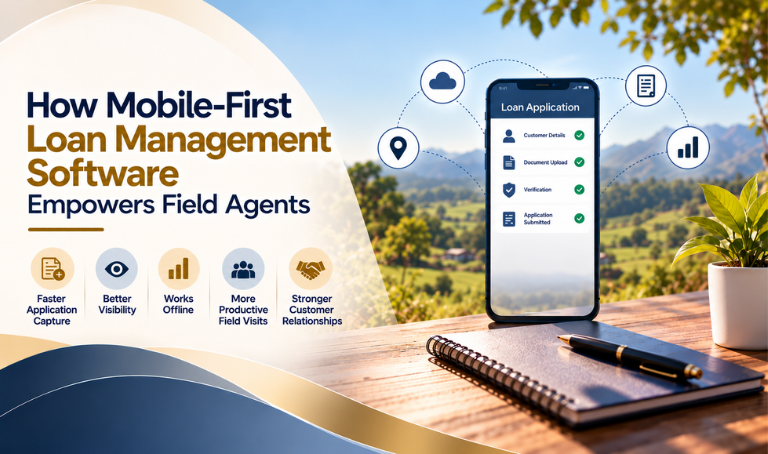
Rural and semi-urban lending relies on field agents to connect lenders with customers across diverse geographies, often amid connectivity challenges and manual processes. Mobile-first loan management software can help financial institutions streamline field operations, improve loan processing efficiency and deliver a smoother, more transparent borrowing experience.
A mobile-first Loan Management System gives field agents access to the information and workflows they need while interacting with customers. Instead of recording an application on paper and entering it into a system later, an agent can capture customer details, upload documents, complete verification steps and initiate an application directly from a mobile device.
This can reduce manual intervention and help minimize delays.
More importantly, it creates a digital trail from the customer's first interaction with the agent through subsequent stages of the loan lifecycle. Branch and central operations teams can track application status without waiting for physical forms or manual updates.
The result is faster processing and better coordination between field agents, branches and central teams.
5 Ways Mobile-First Software Can Transform Field Lending
1. Faster application capture
Field agents can collect customer information and documents at the point of interaction. Predefined workflows and validation rules can reduce incomplete applications and errors that might otherwise lead to repeated visits. For customers in remote locations, avoiding even one unnecessary trip can make a significant difference to the loan experience.
2. Better verification and visibility
Mobile applications can support structured field verification by capturing relevant customer information, documents, photographs, location data and other authorized inputs, where required.
Instead of relying on handwritten notes or verbal updates, lenders receive standardized information that can be reviewed and acted upon centrally. This can also strengthen audit trails, an important consideration as lenders adopt more technology-driven processes.
For digital lending applications covered by its guidelines, the Reserve Bank of India (RBI) emphasizes need-based data collection, prior and explicit borrower consent, and auditable records. Mobile applications should therefore be designed with appropriate data protection and access controls.
3. Working despite connectivity challenges
A rural loan application process cannot assume that field agents will always have a reliable internet connection. Mobile-first systems designed for offline or low-connectivity environments can allow selected information to be captured during a customer visit and synchronized when connectivity becomes available.
This is an important consideration. Digital transformation in rural lending should not make field teams dependent on continuous connectivity.
4. More productive field visits
A connected agent can access assigned leads, pending applications, follow-ups, collection schedules and relevant customer information through a single interface. This makes it easier to plan visits effectively rather than travelling only to discover that a customer is unavailable or additional documentation is required.
Over time, the information generated through these interactions can also help lenders identify patterns in applications, turnaround times, customer behaviour and field productivity.
5. Stronger customer relationships
Technology should make field agents more effective in rural lending. When an agent can answer questions, check application status, capture information and initiate the next step without repeatedly referring the customer to a branch, the interaction becomes more transparent and responsive.
This is particularly relevant in markets where trust plays an important role in borrowing decisions.
Designing for Real-World Field Conditions
A mobile application needs to be designed around the realities of fieldwork. This means simple interfaces, minimal data entry, multilingual or local-language support where required, secure document capture, offline capabilities, role-based access and reliable data synchronization.
It also means integrating the mobile application with the broader Loan Management System so that information does not remain isolated in a separate field application. Ultimately, the technology should reduce administrative work for field agents while helping lenders maintain visibility across the lending process.
From Field Efficiency to Scalable Lending
The larger opportunity is strategic. When field operations become digitally connected, lenders can expand their reach while managing operational complexity more effectively. Applications can move faster, information can reach decision-makers sooner, field activity becomes more measurable, and customers can experience a more consistent loan journey.
India's rural internet user base highlights the growing role of digital connectivity in the country. However, access and connectivity can still vary across locations, making reliable mobile workflows important for field operations.
Mobile-first loan management software can help address these challenges by equipping field agents with tools to make customer interactions faster, more accurate and more productive.
Leave Comments :
© Nelito Systems Pvt. Ltd. Terms & Privacy

Comments :