Identifying repayment stress before it develops into a non-performing asset
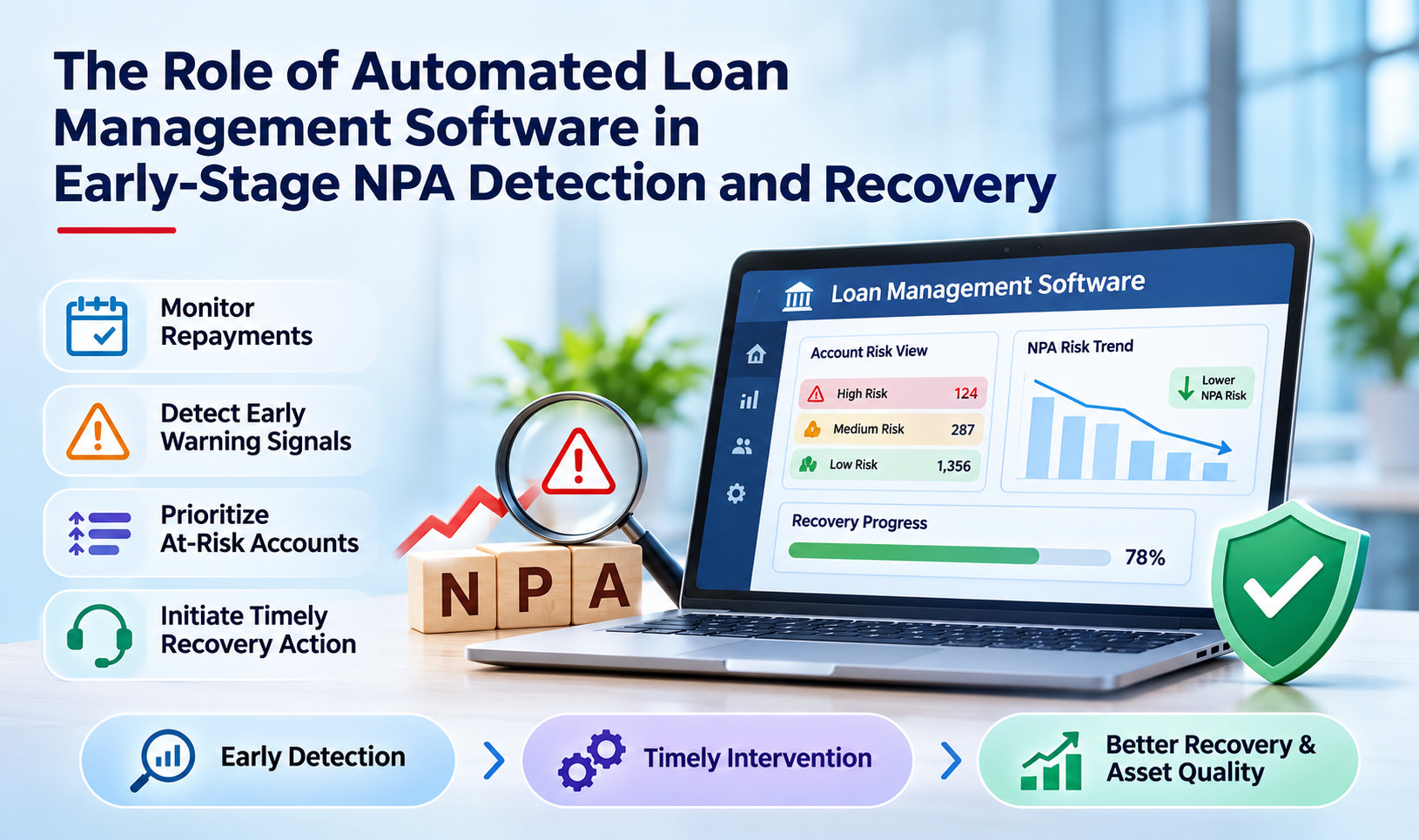
(NPA) is critical for banks and NBFCs. Automated loan management software helps
lenders monitor repayments, recognise early warning signals, prioritise at-risk
accounts and initiate timely recovery action. By connecting loan servicing, risk
monitoring and collections, it enables lenders to move from reactive recovery to
proactive credit risk management
Why Early NPA Detection Matters
India's banking sector has made considerable progress in improving asset
quality. However, fresh NPA slippages remain a concern for lenders. Maintaining
asset quality requires more than recovering existing bad loans. Banks and NBFCs
must identify emerging repayment stress before accounts deteriorate further.
Missed instalments, repeated payment failures, irregular repayment patterns and
changes in a borrower's financial circumstances can all indicate potential
stress. When this information is fragmented across systems or monitored
manually, early warning signs can go unnoticed.
A well-integrated loan management system helps bring relevant loan and repayment
information together, giving lenders better visibility into account performance
and enabling them to respond to potential issues sooner.
How Automated Loan Management Software Enables Early
Detection
Repayment Monitoring
Automated loan management software helps track instalment schedules, payments
received, overdue amounts and repayment histories. When an instalment is missed
or a payment mandate fails, the system can generate an alert and initiate a
predefined follow-up process.
This reduces dependence on manual reconciliation and enables collections teams
to identify overdue accounts promptly. Instead of reviewing large volumes of
loan records, teams can focus on accounts that require attention.
Identifying Early Warning Signals
A missed instalment should not be the only indicator of financial stress. A loan
management system can consolidate repayment histories, previous delinquencies
and other relevant borrower information to help identify patterns that may
signal emerging risk.
Analytics can help distinguish between an isolated payment failure and recurring
irregularities that warrant closer examination. Where sufficient and reliable
data is available, predictive models can also help estimate the likelihood of
future delinquency, allowing lenders to consider appropriate intervention at an
earlier stage.
Automated Alerts and Risk-Based Prioritization
Not every overdue account requires the same response. Automated workflows can
help classify accounts based on the duration of the delay, outstanding exposure,
repayment history and other approved risk indicators.
An initial payment delay may trigger an automated reminder, while repeated
defaults could lead to escalation to a collections officer. Accounts showing
more serious signs of distress can be prioritised for detailed assessment.
This allows lenders to allocate resources according to the urgency and nature of
each case rather than treating every delinquent account identically.
From Detection to Recovery: Closing the Loop
Identifying a stressed account is only the first step. The information must
translate into timely and appropriate action.
Automated loan management software can support reminders through approved
communication channels, assign cases to collection teams, schedule follow-ups
and maintain records of borrower interactions. Supervisors can track pending
cases, monitor collection progress and identify accounts where promised payments
have not materialised.
A consolidated recovery dashboard can help management identify bottlenecks,
monitor collection performance and improve case allocation. It also allows
lenders to distinguish between borrowers unwilling to pay and those facing
genuine financial difficulties. Where appropriate, viable resolution options can
be evaluated instead of relying exclusively on repeated collection attempts.
Besides recovering overdue amounts, the objective is to improve recovery outcomes
while maintaining responsible borrower engagement.
Compliance, Consistency and Better Decisions
The RBI's prudential framework emphasises the early identification and reporting
of financial stress. It provides for the classification of loan accounts into
Special Mention Account (SMA) categories based on the period for which payments
remain overdue. Timely identification and appropriate classification are
important for lenders to monitor stressed accounts and take suitable action.
Automated loan management systems can support this process through configurable
rules, alerts, exception reports and audit trails. These capabilities can help
lenders strengthen operational consistency and support regulatory compliance.
However, automation must be supported by accurate data, clearly defined rules,
appropriate access controls and regular system validation. Human oversight
remains essential to ensure that alerts and analytics translate into fair and
informed decisions.
How Nelito's Loan Management Software Fits In
For lenders, the value of automation lies in connecting loan servicing, repayment monitoring and collections into a coordinated workflow. A suitable loan management solution can help financial institutions manage loan-related processes more systematically and improve visibility across lending operations.
Nelito Systems offers Loan Management Software for financial institutions. Its experience in banking and financial technology provides a relevant foundation for supporting lenders as they work to streamline lending operations and manage loan accounts more effectively.
By adopting an appropriate loan management system, lenders can strengthen their ability to monitor repayment activity, identify exceptions and support informed recovery decisions.
Conclusion
Early NPA detection should involve more than identifying a missed payment. It requires recognising patterns, understanding emerging risks and responding before repayment problems become difficult to resolve.
Automated loan management software gives lenders better visibility into loan accounts and supports a more structured approach to repayment monitoring and recovery. Combined with sound credit policies, reliable data and responsible borrower engagement, it can play an important role in protecting asset quality and building more resilient lending portfolios.


Comments :