
Nelito Systems offers FinCraft™ Core Microfinance Software Solution, designed to support the lending and field operations of microfinance institutions. The solution includes an Android-based mobility application that helps field teams manage activities such as customer onboarding, loan processing and repayment collections. It also brings together borrower information, loan management and collection processes on an integrated platform. With configurable workflows and support for field operations, FinCraft™ can help microfinance institutions streamline daily activities, improve operational visibility and manage their growing operations more effectively.
How to Choose Microfinance Software for Offline and Remote Field Collections
Updated On : November 2026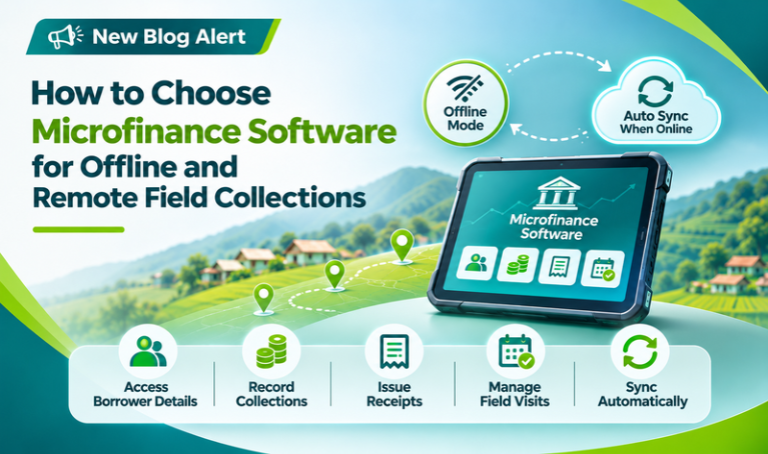
Microfinance institutions often operate in areas where internet connectivity is unreliable or unavailable. Field officers regularly visit borrowers in remote locations to collect repayments, update records and manage customer interactions. In such situations, having reliable microfinance software that supports offline operations is essential for maintaining uninterrupted field activities.
The right microfinance software should enable field officers to access borrower information, record collections securely, issue repayment acknowledgements and synchronise data once connectivity is restored. It should also support both cash and digital repayment channels while providing management teams with visibility into field operations.
As India's microfinance sector continues to serve a large borrower base, technology plays an important role in improving collection efficiency and operational control. The SIDBI-Equifax Microfinance Pulse Report highlights the scale of the sector, reinforcing the need for reliable digital systems to support field operations.¹
Here are some important factors to consider when choosing microfinance software for offline and remote field collections.
1. Prioritise Genuine Offline Functionality
Offline functionality is one of the most important requirements when selecting microfinance software for remote field collections. Field officers should be able to continue their assigned activities even when they do not have access to a stable internet connection.
The software should allow authorised field officers to:
- Access assigned borrower details, loan information and repayment schedules.
- Record cash collections and other permitted field transactions.
- Generate receipts or repayment acknowledgements.
- Update borrower details, visit records and follow-up information.
- View relevant collection schedules and pending activities.
Once internet connectivity is restored, the application should automatically or securely synchronise the recorded information with the central system.
It is also important to check how the software handles transactions recorded offline. Each transaction should have a clear status, such as pending synchronisation or successfully synchronised. The system should help prevent duplicate entries, identify synchronisation conflicts and maintain a reliable transaction history.
This ensures that field operations can continue without compromising the accuracy and consistency of collection records.
2. Look for Mobile-First Field Collection Management
Microfinance field officers need software that is easy to use while travelling between borrower locations. A mobile-first interface can simplify daily collection activities and reduce the time spent on administrative tasks.
The software should provide features that help field officers manage their daily responsibilities, including:
- Access to assigned borrower and group details.
- Daily collection targets and repayment schedules.
- Borrower visit tracking and follow-up updates.
- Route planning or location-based allocation, where supported.
- Information on overdue accounts and pending repayments.
An intuitive interface is particularly important for field teams working in remote locations. It should make frequently used functions easy to access and minimise unnecessary steps when recording transactions.
The software should also help supervisors monitor field activities and identify collection delays or operational issues.
3. Support Cash and Digital Repayment Channels
Microfinance institutions often depend on a combination of cash and digital repayment methods. Their software should support the recording and tracking of different collection channels while maintaining accurate transaction records.
For cash collections, the system should allow field officers to record payments, issue receipts and maintain collection details for subsequent reconciliation.
For digital payments, the software should support integration with relevant payment gateways, UPI platforms and banking channels, depending on the institution's requirements.
Digital collection initiatives are also gaining importance in the microfinance sector. Sa-Dhan's Bharat Microfinance Report 2026 highlights SATYA's UPI-enabled collection initiative, which includes client-specific UPI QR codes and UPI AutoPay to facilitate digital repayments.²
However, institutions should distinguish between recording a transaction offline and completing an actual digital payment. A payment initiated or recorded without connectivity should not automatically be treated as confirmed. The system should clearly indicate whether a transaction is pending, successful or requires verification.
This distinction helps institutions maintain accurate repayment records and avoid reconciliation issues.
4. Ensure Visibility and Accurate Reconciliation
When field collections take place across multiple locations, management teams need a centralised view of collection activities. Microfinance software should provide dashboards and reports that help supervisors monitor field performance and identify discrepancies.
Important information to track includes:
- Daily collection targets and actual collections.
- Branch-wise and field officer-wise performance.
- Due, collected and overdue repayments.
- Cash collections and corresponding deposit records.
- Delinquency trends and portfolio quality indicators.
- Transactions pending synchronisation or reconciliation.
Automated reports and alerts can help management identify missed collections, delayed deposits and unusual transaction patterns.
The ability to view updated information centrally also supports better coordination between field officers, branch teams and management. This improves operational visibility and helps institutions take timely corrective action.
5. Check Regulatory Compliance and Data Security
Microfinance software handles sensitive borrower information and financial transaction records. Therefore, data security and regulatory requirements should be important considerations when evaluating a solution.
The software should support appropriate security measures, such as:
- Secure storage and transmission of borrower information.
- Role-based access controls and user authentication.
- Transaction-level audit trails.
- Secure synchronisation between mobile devices and central systems.
- Data backup and recovery mechanisms.
- Device-level security and the ability to restrict access to lost or unauthorised devices.
Institutions should also evaluate how the software supports regulatory and operational requirements. The Reserve Bank of India's Master Direction on the Regulatory Framework for Microfinance Loans outlines borrower protection requirements, including loan cards, repayment acknowledgements, grievance redressal mechanisms and fair practices.³
Microfinance software can help institutions maintain records and support these processes. However, using software alone does not guarantee regulatory compliance. Institutions must ensure that their policies, processes and actual operations meet the applicable requirements.
It is also important to understand the software provider's approach to data protection, access management, backups, disaster recovery and handling of lost devices.
6. Choose Software That Integrates with the Core Lending System
Field collection activities should be connected with the institution's broader lending operations. Microfinance software should integrate effectively with the core lending or loan management system to maintain consistency across borrower records, repayment schedules and financial transactions.
Useful integration capabilities may include:
- Synchronisation of borrower and loan information.
- Automatic updates to repayment records.
- Integration with accounting and financial systems.
- Connectivity with payment platforms and banking channels.
- API-based integration with other relevant applications.
Institutions should also assess whether the software can accommodate their lending models, repayment frequencies, group lending processes, branch structures and operational workflows.
A well-integrated system reduces manual data entry, minimises inconsistencies and provides a more complete view of borrower and loan information.
7. Evaluate Scalability, Usability and Total Cost of Ownership
The software should meet the institution's current operational requirements while allowing it to expand as its borrower base and field operations grow.
Before making a decision, institutions should evaluate:
- Ease of use for field officers and branch teams.
- Ability to support additional branches and users.
- Flexibility to accommodate changing business requirements.
- Implementation and customisation costs.
- Mobile device and infrastructure requirements.
- Training, maintenance and upgrade expenses.
- Vendor experience and technical support.
A pilot implementation can help institutions understand how the software performs under actual field conditions. Testing should include areas with different levels of network connectivity, offline transaction recording, data synchronisation, duplicate transaction handling and reconciliation.
Feedback from field officers and supervisors can also help identify usability issues before the software is deployed across the organisation.
Conclusion
Choosing the right microfinance software for offline and remote field collections requires more than checking whether an application works without internet connectivity. Institutions should evaluate its ability to record transactions securely, support different repayment channels, synchronise data accurately and provide centralised visibility into field operations.
A reliable solution can help reduce manual work, improve field officer productivity and strengthen collection monitoring. By considering offline functionality, mobile usability, data security, integration capabilities and scalability, microfinance institutions can select software that supports their operational needs.
Ultimately, the best software is one that enables field operations to continue reliably, even when internet connectivity is unavailable.
References
Leave Comments :
© Nelito Systems Pvt. Ltd. Terms & Privacy

Comments :